 Esport Me
How the Valorant Champions Tour works: leagues, Masters and the road to Champions
A breakdown of how Riot Games has structured Valorant's global tour across three eras, from open qualifiers to franchised leagues and back again from 2027.
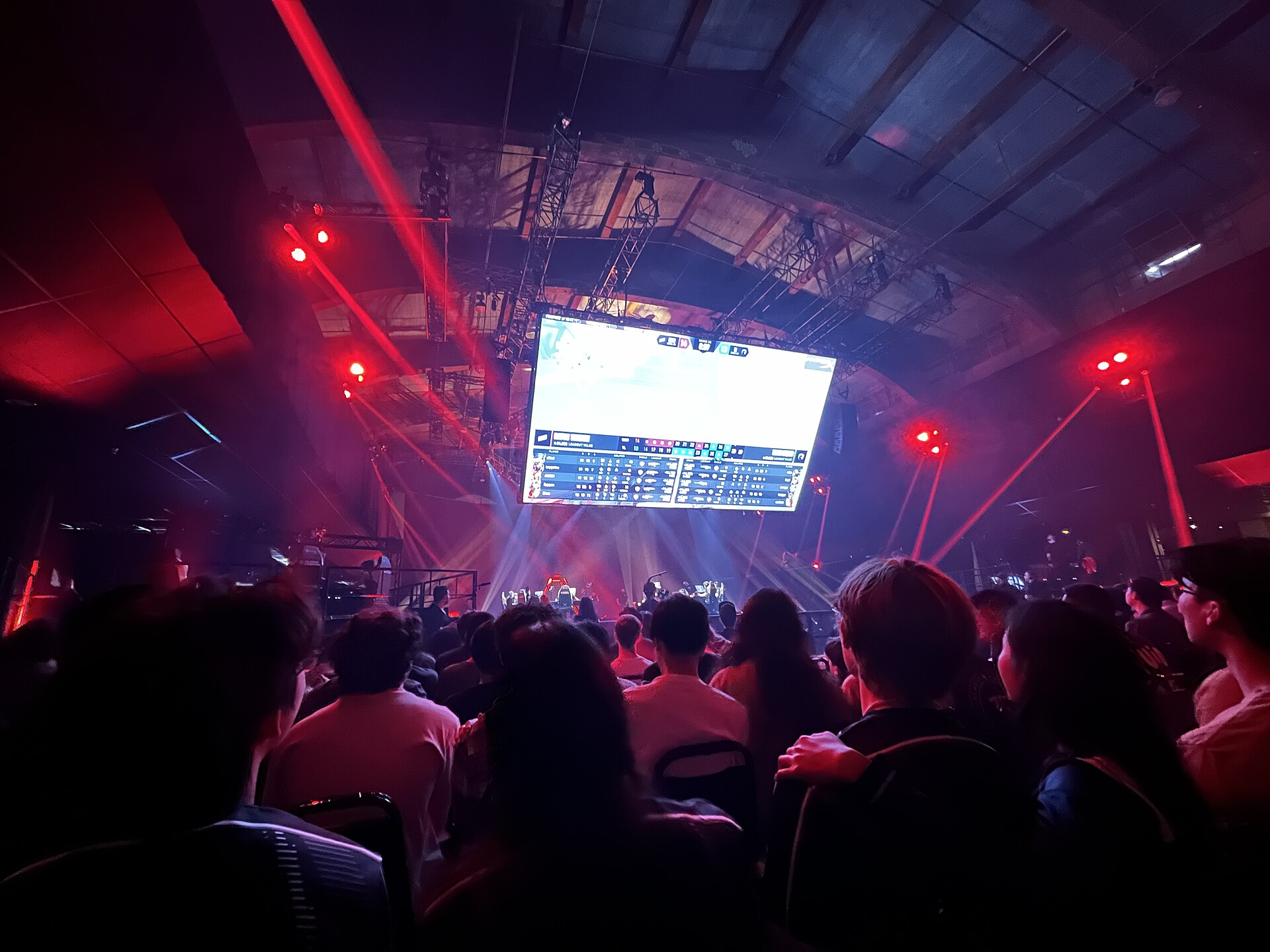
The Valorant Champions Tour is Riot Games' global competitive structure for Valorant, built around a pyramid that funnels teams from regional competition towards Valorant Champions, the season-ending world championship, according to Wikipedia.
Riot announced the VCT in November 2020 and ran its first season in 2021 on a three-tier model: Challengers at the base, Masters in the middle, and Champions at the top. Challengers was split by region — North America, Brazil, Latin America, EMEA, Southeast Asia, Korea and Japan — with results feeding upward, and the top 16 teams from Masters earning places at Champions, the finale of each season, Wikipedia reports.
That first Champions ran in Berlin in December 2021, with Acend beating Gambit Esports 3-2 in the final. A year later Champions moved to Istanbul, where LOUD defeated OpTic Gaming 3-1 to take the 2022 title, per the same source.
The franchised era and its three leagues
From 2023, Riot replaced the seven-region Challengers system with three International Leagues — VCT Americas, VCT EMEA and VCT Pacific — each built from a fixed group of partner teams selected in September 2022 as part of a 2023-2027 partnership arrangement, Wikipedia states. Each league functioned as the domestic competition that decided which teams moved on to Masters and Champions.
China sat outside this structure initially, with Chinese teams reaching Masters and Champions through third-party tournaments played on a Hong Kong server rather than through the Pacific league. Once Valorant launched commercially in mainland China in 2024, Riot stood up a dedicated VCT China league with ten partner teams, plus two more qualifying through an event called China Ascension, bringing the total count of partnered organisations across all four territories to 40.
Masters and Champions: the international layer
Valorant Masters is run twice a year as the mid-season international event, comparable in weight to League of Legends' Mid-Season Invitational, according to Wikipedia. Qualification for Masters depends on a team finishing near the top of its regional league rather than on open bracket play.
Champions remains the season's culmination, assembling the teams that have accumulated the most points across the year's regional and international competition to decide the world champion. The Champions trophy itself, unveiled for the first event in 2021, was built by Volpin Props of Atlanta, stands roughly two feet tall, and is partially 3D-printed with 24-karat gold detailing, per Wikipedia.
Running alongside the main men's circuit is Valorant Game Changers, a domestic series for women and other marginalised genders. Teams that finish well in Game Changers qualify for the Game Changers Championship and can also earn promotion into their region's wider competitive pathway.
Wikipedia reports that the franchising system drew sustained criticism almost immediately after its 2023 launch, chiefly for shutting non-partner "tier 2" teams out of a realistic route to Masters or Champions unless they won Ascension tournaments. Those teams also received far less support than partnered organisations, and several were forced to disband after failing to break through. Criticism reportedly came from figures including 2021 Champions winners Acend and two-time Masters champion TenZ.
Riot never issued a formal statement acknowledging the failure, according to Wikipedia, but it ended the franchising era in 2026 — a year earlier than the original 2027 schedule — and confirmed on 8 April 2026 that a new system would apply from the 2027 season onward.
What changes from 2027
The 2027 overhaul keeps the three-split season but returns to open regional qualifiers, meaning every team, including current partner organisations, will have to play through qualifying rather than holding a guaranteed league slot. The separate tier-2 system disappears. In Stage 1 and Stage 2, qualifier results will feed into a new international format called Cups, which in turn decide who reaches Masters and Champions, while the Kickoff stage keeps its own distinct international format, Wikipedia states.
Existing International Leagues will be disbanded under the new plan, though the four major territories — Americas, EMEA, Pacific and China — stay in place, each hosting its own Cups. Partnership arrangements switch to a two-year cycle, with former partner teams retaining some qualifying incentives and non-partner teams promised additional financial support intended to address the sustainability problems that undermined the franchised era.
Photo credits
File photo (2023). Photo: David Jiang · CC BY-SA 4.0 · via Wikimedia Commons · shown in full here; cropped in thumbnails
